
I’ve Always Wanted A House With A Porch
“I feel sorry for houses without porches. If houses with porches are the huggers of architecture, the non-porched are those houses that offer a stiff handshake at first meeting.”
— Erin Napier, designer and television host of HGTV Hometown
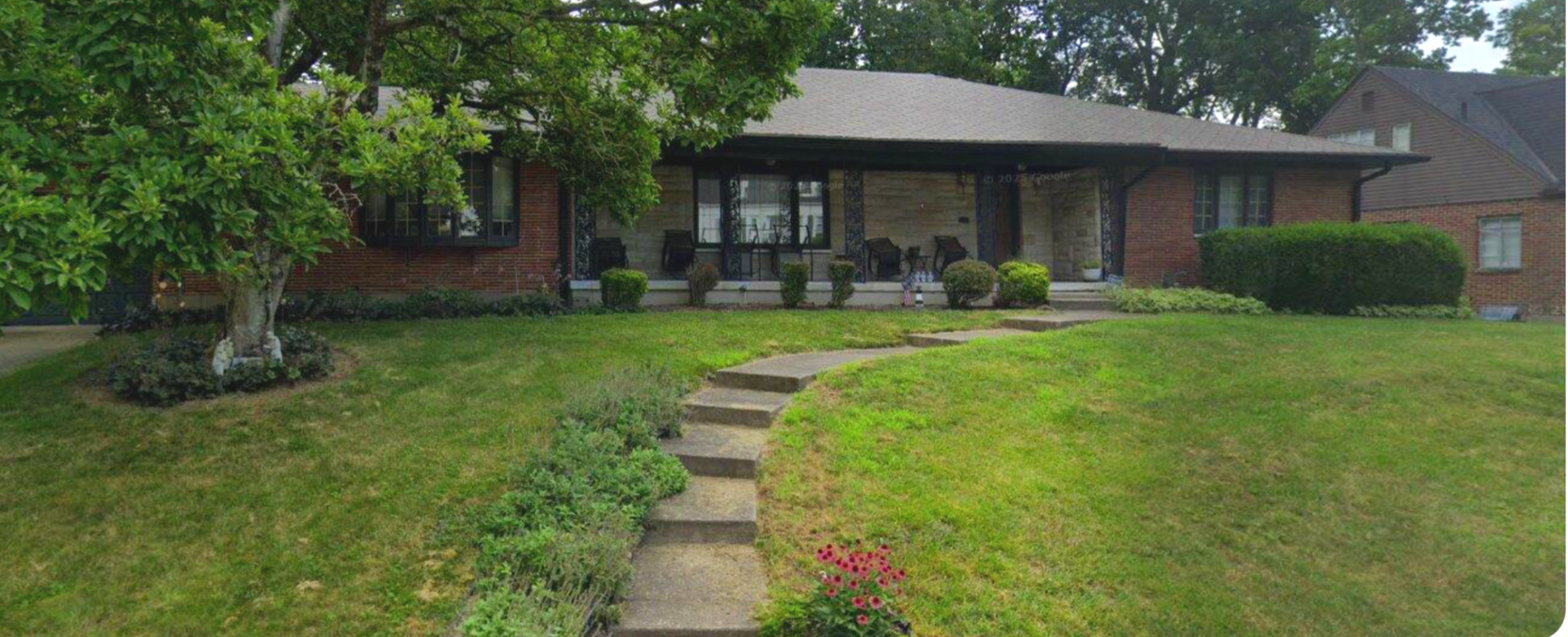
The house I grew up in Dayton, Ohio.
Porches are grand places of hospitality, and ever since I left my parents’ home at 18, I’ve wanted one. A porch is like a smile on the front of a house. An invitation that says we’re nice people. You’re welcome here. And they’re the first introduction a home can make to extend hospitality, the friendly and generous reception and care of people. The art of making people feel welcome, safe, comfortable, and valued.
My parents welcomed people to our home for events ranging from holiday meals and family reunions to political fundraisers, and all of the guests were received though the front porch. My mother, a lawyer and social worker, was an incredible home decorator. She was tablescaping before it became a word. From the entry to the living room, kitchen, and bathrooms, my mom thought of everything from beautiful hand towels, to award worthy homemade German chocolate and coconut orange pound cakes, to the china pattern, crystal water goblets, and serving pieces that filled the table, sideboard, and spilled over into the kitchen. I learned a lot from my mom about what hospitality meant, how we should be generous toward the people who visit our home, but it took many years for me to understand that the most important hospitality to practice is the kind we extend to ourselves.
The View from the Front Porch
Growing up (when it didn’t mean chores like sweeping or pulling weeds), the porch to me was an invigorating Saturday morning view of the neighbor kids across the street, standing at full attention waiting for the signal: the sign that our chores were complete, and we had permission to ride. My sister and I’d descend to the street, part dragging and part lifting our bikes from the porch to the front steps, to set sail ‘round and around the block for hours, wind through our hair, and return later for a quick snack that my mom prepared like peanut butter smeared on celery or small boxes of raisins.
American porches were named after the early Greek and Roman term “portico,” and were seen even in ancient Persia, but the type of porch that caught popularity in America was believed to have been brought by enslaved West Africans living who constructed porches on their shotgun homes. The porch gave people relief from the heat that built up inside their hot, southern homes. But porches became less popular as air conditioning became common. Without the porch, America lost an opportunity for connection. In many ways, the house became the stiff handshake. Families no longer sat on their porches in the evening to greet neighbors passing by. And lost were many of the stories and traditions that the porch brought us. Connection, and lack thereof follows us, even at work.
When I envision The Bungaloom, the porch is a warm hug that says welcome. It’s a place where we’re not living in the future by looking at our clocks or cell phones but enjoying the present moment. We’re not striving, proving, or accomplishing, we’re just chatting, laughing, and drinking tangy sweet lemonade or peach iced tea. It’s a place where the friendly and generous reception and care of people makes them feel welcome, safe, comfortable, and valued. The “porch” can extend into anywhere we go.
And the porch can be a place where sitting alone in stillness, listening to birds in the trees - a place to clear the mind of worry or sink into a good book, is also a very hospitable option.
This the Ohio home where I spent summers pulling up mounds of crabgrass and dandelion weeds glued to the front walkway and winters sledding down the front hill during January’s deep snow and marching back up the hill to do it again and again before dropping my snowy boots and gloves on the porch to head inside for cocoa.
Shai Littlejohnhttps://www.shailittlejohn.com/